
What Changed When I Stopped Typing Code

The founder-level lesson from AMTIL's AI-Director workflow: the leverage is not just speed. It is memory, coordination, and better evidence.
I stopped typing code as the center of the workflow.
At first, that felt like a productivity story. It was not. The more important shift was that a conversational browser AI could coordinate the work: asking questions, reading the state of the product, pushing specialized coding agents, and summarizing the evidence back to me so I could make the call.
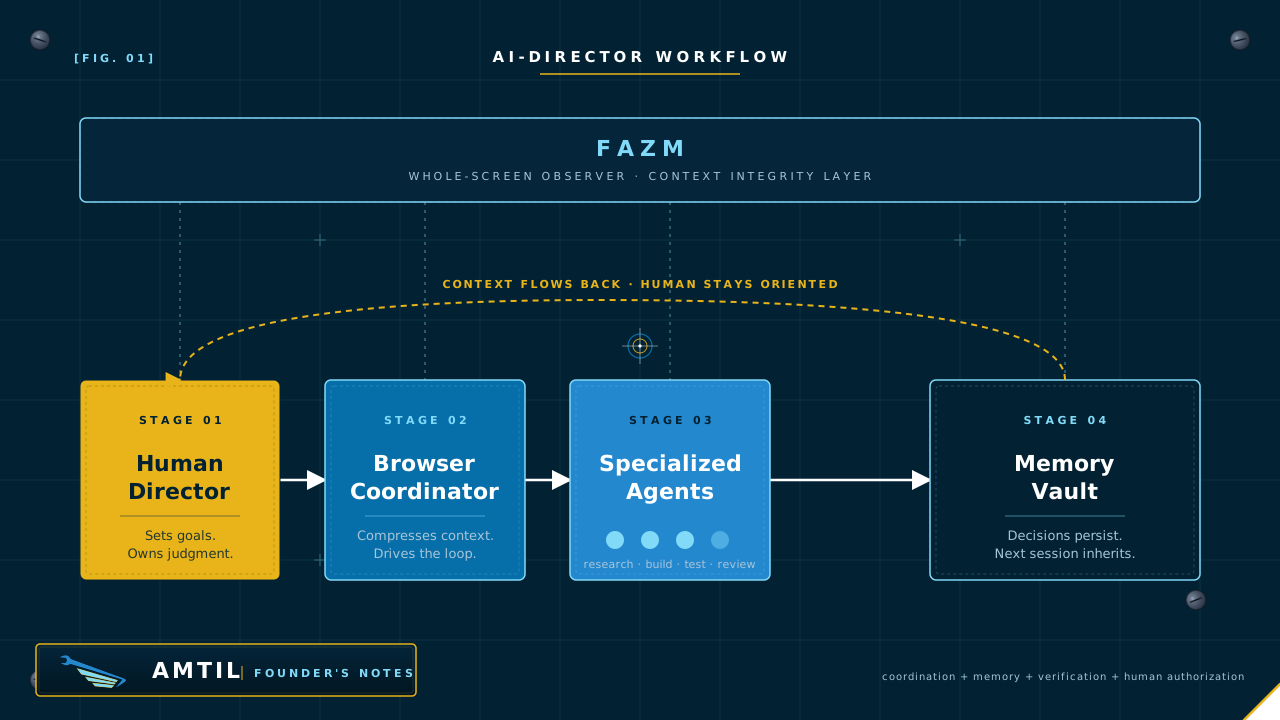
That coordination now includes a full-screen observer we call Fazm. Fazm is an open-source AI agent for macOS that watches the whole screen and reads the actual UI element tree, not pixels, so the workflow can be checked from start to finish. We use it as part of the loop, watching the work as it moves across screens, agents, product previews, and evidence.
That changed my role. I was not inside the agent pipeline typing every instruction. I was above it, setting goals and approving consequential decisions. The system helped with context. Fazm helped keep the visible state honest. I still owned the judgment.
1. What I Noticed
Most AI workflow demos emphasize autonomy: let the agent run, then inspect the result. AMTIL is more interested in directed orchestration.
When one model plans, executes, and explains its own work, it can become persuasive before it becomes correct. That might be fine for early brainstorming. It is not enough for work that affects a real product, a real student, or a real training team.
So our internal workflow separates the roles. A conversational AI coordinates. Specialized agents do scoped work. Persistent organizational memory keeps the company from forgetting why a decision was made. Live browser verification lets the coordinator see the product, not just infer it from code. As that happens, Fazm is already watching the whole screen, so a step that drifts, stalls, or lands in the wrong visible state can be caught and re-run before it becomes something I am asked to approve.
The useful part is not any single model or tool. The useful part is the arrangement: coordination, memory, verification, and human authorization in one operating pattern.
2. How This Looks In Practice
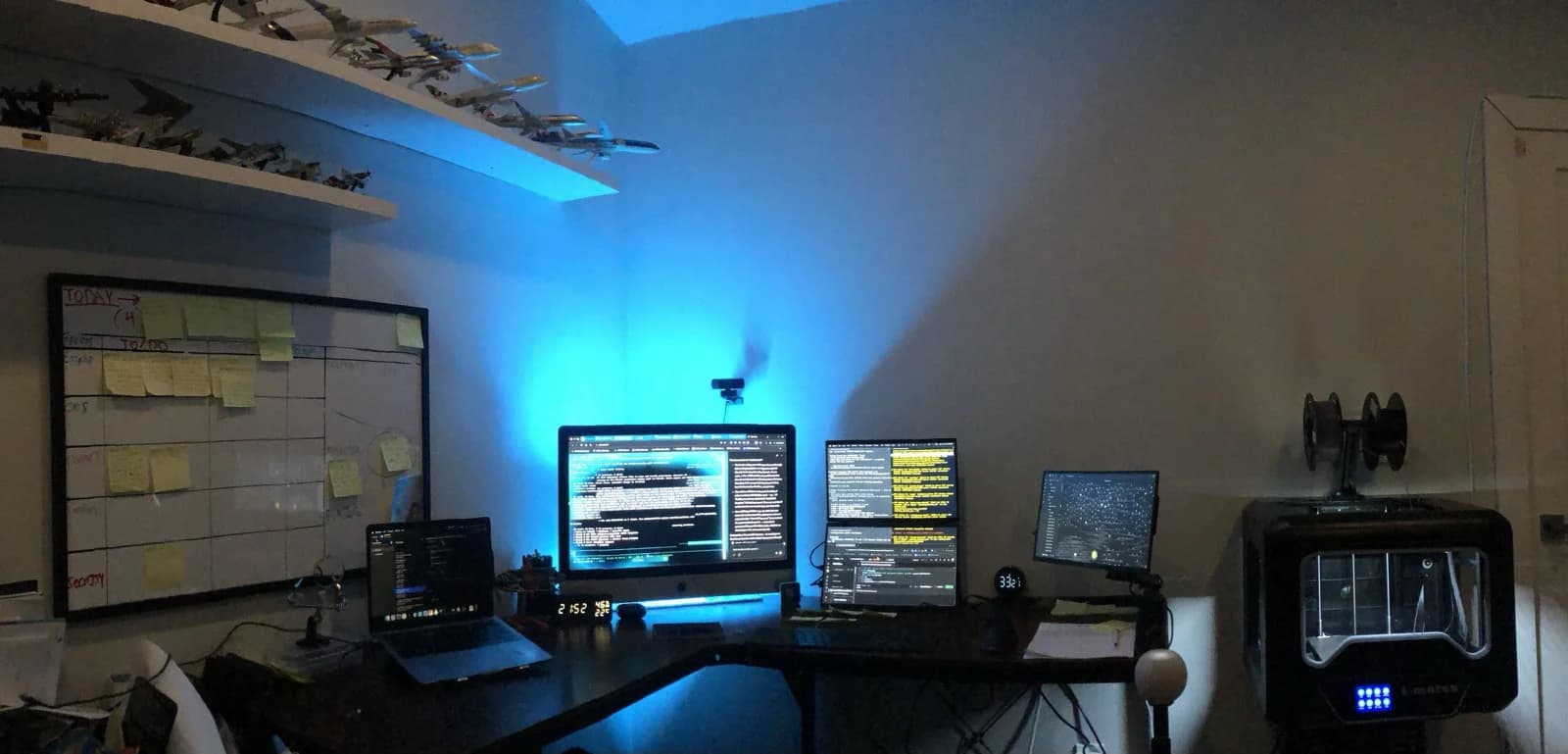
In practice, this looks like a small technical command room. One screen may show the product. Another may show an agent session. Another may hold research, memory, or review context. Fazm watches that whole surface as the work unfolds. The point is not the screens. The point is that the coordinator can compress what is happening, Fazm can keep the visible loop observable, and the human decision-maker stays oriented.
That matters because the workflow itself is something we are building for the entire team, not just for one person at a keyboard. Design, engineering, content, operations, and leadership all lose time when context has to be reconstructed from memory. The goal is to discover repeatable ways for people across disciplines to join the work, see the current state, and trust that prior decisions were captured.
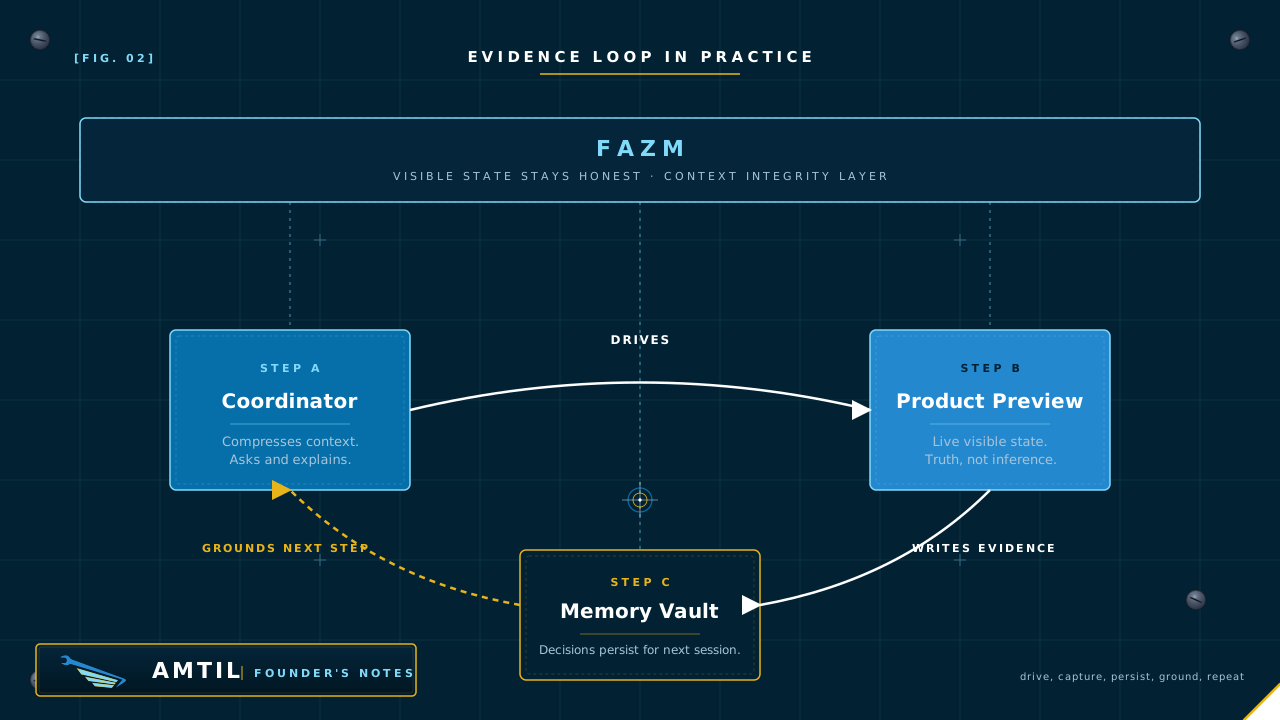
A shared memory layer changes that. It lets distributed teammates plug into a session, inherit the decisions that already happened, and understand why the work is moving in a particular direction. The coordinator compresses what matters. Fazm makes the live screen state inspectable. The memory stores what should persist. The human decides what is consequential.
There is also an infrastructure lesson underneath this. The proper orchestration of multiple models matters: open-source models where privacy, local control, or customization are the priority; closed-source frontier models where reasoning depth or specialized capability is worth the tradeoff. The judgment is knowing when and where to use each, especially around data, attention, and focus. For AMTIL, autonomy and privacy are not side concerns. They are part of the architecture.
3. What It Means For The Product
This workflow is how we build and validate parts of AMTIL today. The same architecture becomes abstracted and hardened inside the product: a conversational guidance layer, an agentic backend, and a judgment layer that knows when to escalate instead of guessing.
That is one module of a broader aviation maintenance training platform. AMTIL still includes interactive content, structured learning, assessments, references, and progress tools. But this orchestration pattern gives us a blueprint for real-time guidance when a technician or student is under pressure.
Imagine standing in front of an engine at 2am with a write-up you do not fully understand. The product should not behave like a chatbot with confidence. It should compress context, ground the guidance, and defer when the situation requires human judgment.
4. Fazm Inside The Loop
For readers new to the term: Fazm is an open-source AI agent that runs on a Mac and continuously watches the whole screen. It reads the actual UI element tree of every open app, not a screenshot. We use it as a constant observer above the workflow.
False confidence often begins with false context. If a system thinks it is looking at the current state when it is actually looking at a stale or partial view, every downstream claim can become suspect.
That is why Fazm is load-bearing in the workflow. As the coordinator drives the session and the agents work, Fazm is already watching the whole screen. When the visible state does not match the story the agents are telling, the work can be questioned, corrected, or re-run before it ever reaches the final human approval step.
Fazm is open source, which matters. It gives us room to customize deeply instead of treating the observer layer as a fixed black box. Our direction is to build on that foundation, evolve it into a different tool, rename it, and shape it into something we can eventually offer customers as part of a more controlled AMTIL workflow.
I am keeping the wiring private, but the operating idea is simple: if the workflow depends on context integrity, the loop should be visible while it is happening, not reconstructed afterward from summaries.
5. Why This Matters
The goal is not AI confidence. The goal is better evidence for the humans and teams responsible for technical decisions.
That is the real shift for AMTIL: not AI replacing judgment, but AI helping the team carry more context while keeping the human responsible for the decision. Faster work matters. Persistent memory matters. Visual verification matters. Fazm matters because it keeps the active workflow observable as it happens. But the reason these pieces matter is practical: they help us build, review, and eventually deliver aviation maintenance training tools with more context and less guesswork.
About the Author

Co-Founder and CEO of AMTIL, the world's first gamified, AI-driven interactive virtual learning platform for aviation maintenance students. Trained at Vaughn College of Aeronautics and Technology after earlier flight training at CAE Global Aviation Academy in Europe. Currently serves on the Aviation Maintenance Advisory Board at Kansas State University Salina.
Connect on LinkedInExplore More from AMTIL
Discover our interactive encyclopedia and training resources.