
Inside the Wings: Keeping Boeing 717s Safe and Soaring

My name is Mary, and I am a Hawaiian Airlines Aircraft Maintenance Technician. I have worked in the aviation industry for 4 years, and I couldn't have imagined a better, more fulfilling career field. I am a base maintenance mechanic, so I mainly work the C-checks on the Boeing 717s.
These planes fly back and forth between the Hawaiian islands, taking about 11 flights each day. Since they have so many flights every day, it causes a lot of stress on the aircraft structure due to the constant pressure changes.
The Heavy Check Process
When the plane comes in for the heavy check, we are tasked with removing many different components, which include flight controls (ailerons, spoilers, elevators and rudder), all the cabin seats and cargo bay floors, as well as many other equipment items. Everything is then thoroughly inspected for damage and corrosion, and it is all fixed or replaced and put back exactly the way it came. This whole process takes 1-2 months, depending on the condition that the aircraft comes to us in.
Fuel Tank Work
Since I am a petite woman, I have the advantage that I can fit in a few places that many others cannot. One of these places is the fuel tanks, located inside both wings and under the floor in the center of the cabin.
These metal tanks are multiple chambers that are 5 feet long, 2 feet wide and 2 feet tall, each divided by a thin metal wall with two lightning holes. The purpose of entering a fuel tank can be internal repairs of rivets or sealant patches, and fuel pipe removal and installation to gain access for inspection areas.
When I am tank diving, I have a small entrance hole from the ground that I can hardly fit my shoulders through, and I often jump through each chamber through those lightning holes. It can be physically demanding due to the constricted space and rigidity inside. However, it is also psychologically challenging to fight any feelings of claustrophobia and to remain calm if you ever feel like you become stuck inside.
The Reward
However difficult this job may seem, I have found that it has all been fulfilling and worth every bit of effort. Since embarking on my journey of aviation maintenance, I have a much greater appreciation for connecting people with the rest of the world and helping them travel safely to wherever they need to go.
Aviation is a magnificent industry that makes the world more accessible to everyone. I enjoy having the ability to see the passengers board our planes and feel completely safe, comfortable, and relaxed on their flights as a direct result of my hard work and dedication.
About the Author
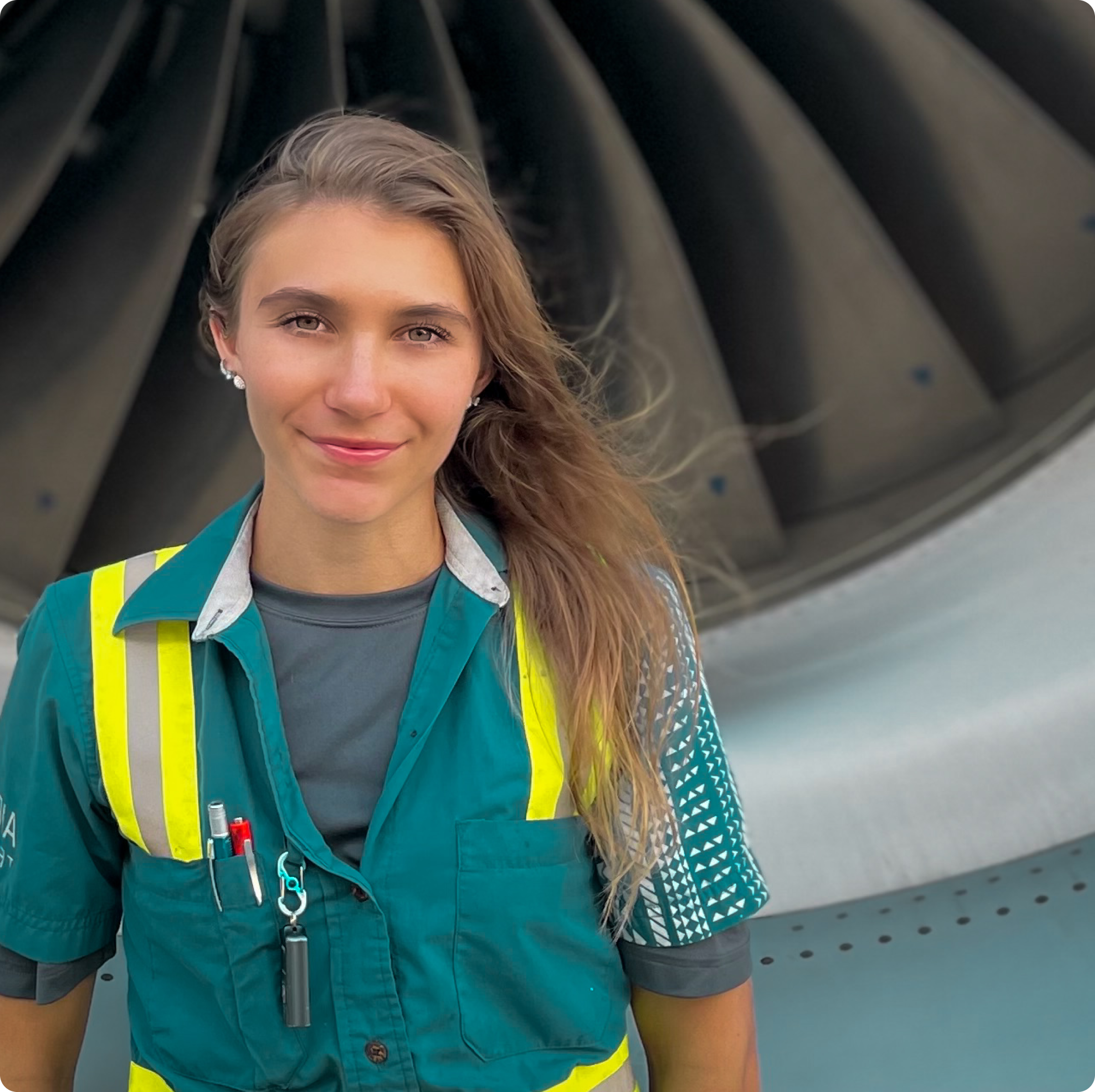
Certified in Airframe & Powerplant from the National Aviation Academy with expertise in composites layup. Dedicated member of Women of NAA, committed to advancing women in aviation.
Connect on LinkedInExplore More from AMTIL
Discover our interactive encyclopedia and training resources.